
Structural Drying In Westbury, NY
Structural drying uses commercial-grade dehumidification and air movement to remove moisture from framing, subfloor, and drywall after extraction, the step that determines whether a water event turns into a mold problem.
Need A Crew Dispatched?
Someone is available to take your call any hour, any day of the year.
☎ Call (516) 283-1188Visible standing water is only part of what needs to dry out. Framing lumber, subfloor, and insulation can hold moisture well after a surface looks dry, and drywalling or flooring over a structure that hasn't fully dried is one of the most common causes of hidden mold discovered months later. We use moisture meters to track drying progress daily rather than estimating based on time elapsed, and we don't close out a job until readings confirm the structure is back to a safe moisture range.
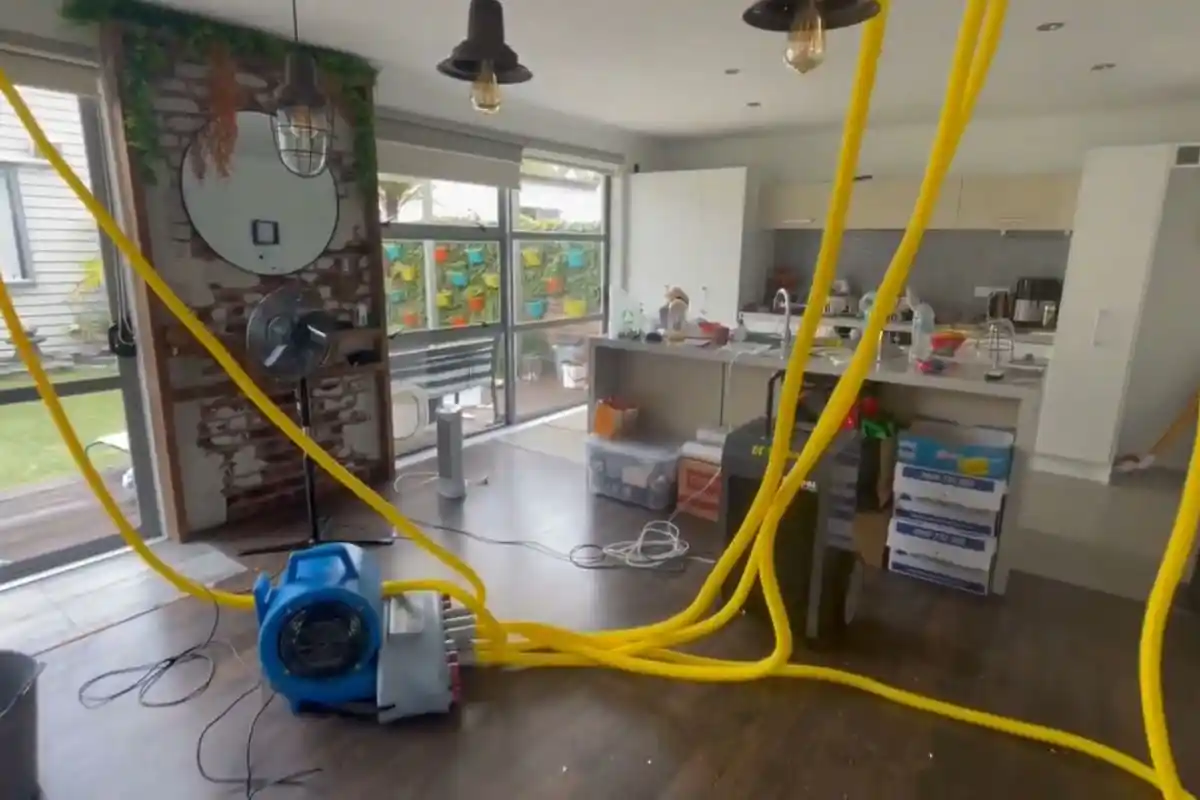
Framing lumber dries more slowly than drywall, which means a room can look and feel dry to the touch while structural members underneath are still holding moisture. This is the most common reason a drying job that looks finished on day two actually needs four or five days to fully clear.
What To Expect On Cost
Drying time, not equipment count, is the main cost driver, a job that needs an extra two days of dehumidification costs more in equipment rental time even with the same number of units running.
Signs Structural Drying Is What You Need
- !A water event where extraction has already happened but framing feels damp
- !Musty odor persisting after visible water is gone
- !Moisture meter readings still elevated in walls or subfloor
- !A recent water event in a home with forced-air heating that could spread moisture
How We Help With Your Claim
Daily moisture logs are exactly the kind of documentation adjusters ask for to justify drying-time line items, we provide these as standard rather than only on request.
Why We Use Multiple Types Of Moisture Readings
A pin-type moisture meter measures moisture at a specific depth by inserting small probes into the material, useful for checking framing lumber at a known depth. A non-invasive meter reads relative moisture across a broader surface without penetrating the material at all, faster for scanning large areas like drywall panels but less precise about exact depth. Using both together gives a more complete picture than either alone, the non-invasive scan identifies where to focus, and the pin-type reading confirms exact moisture content at that specific point.
This combination matters most on jobs with mixed material types in the same space, a room with both drywall and exposed framing benefits from different measurement approaches for each material rather than a single method applied uniformly across everything.
We record both types of readings in the daily drying log we provide, giving a documented, objective basis for when a job is actually complete rather than relying on a single number or a subjective assessment that a space simply feels dry.
How This Job Actually Goes
Baseline Moisture Reading
Every affected material gets an initial moisture reading before drying starts.
Position Equipment
Air movers and dehumidifiers are placed based on the specific moisture map, not a generic layout.
Track Daily Progress
Readings are checked daily rather than estimating drying time from a fixed schedule.
Confirm Safe Range
The job doesn't close until readings confirm the structure is back to a safe moisture level.
Other Services You May Need
Water Mitigation
View Service →Water Extraction
View Service →Ceiling Water Damage Repair
View Service →Structural Drying FAQ
How long does structural drying usually take?
Typically 3 to 5 days depending on how much material was saturated and the ambient humidity, verified with daily moisture meter readings rather than a fixed timeline.
What happens if drywall is put back before the structure is dry?
Trapped moisture behind new drywall is a common cause of hidden mold discovered months later, which is why we confirm moisture readings are safe before any rebuild begins.
How do you know when drying is actually complete?
Moisture meter readings on framing and subfloor need to return to a safe baseline range, not just a visual or touch check, before we consider a structural drying job finished.
Can I speed up drying by running my own fans too?
It can help modestly, but professional-grade air movers and dehumidifiers move significantly more air volume and moisture than household fans.
Need Structural Drying In Westbury?
Call now, a restoration crew can be dispatched to your address.
☎ Call (516) 283-1188